

Different Types of Mixer Grinders Explained in 2026
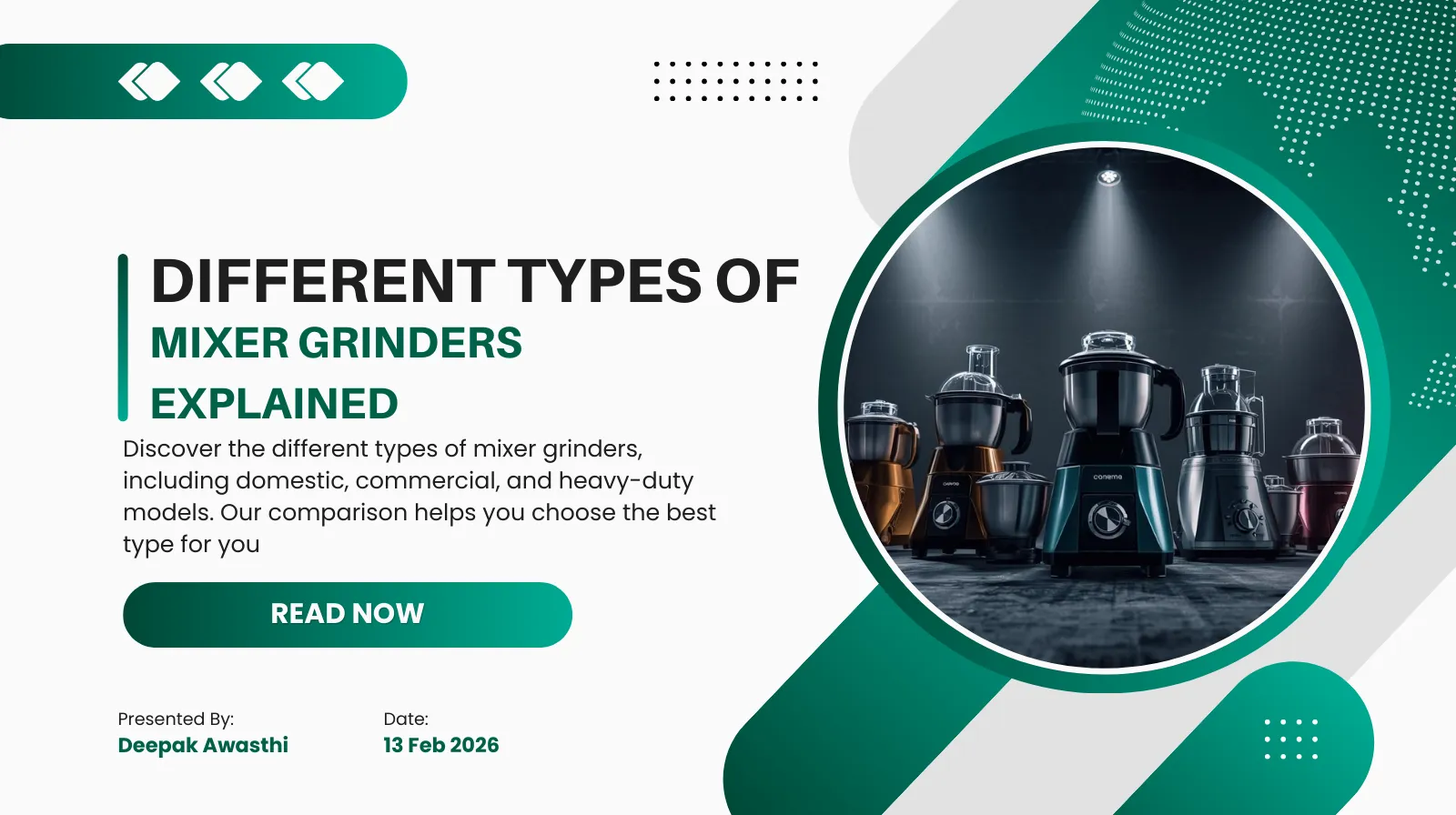
The mixer grinder is an essential appliance in almost every Indian kitchen, working tirelessly behind the scenes to create everything from fine spice powders to smooth batters. The difference between daily home cooking and the high-volume demands of a commercial kitchen is vast, which is why so many types of mixer grinders are available on the market. This variety ensures that whether you’re a home cook or a professional chef, there’s a machine built for your specific needs. This article will serve as your ultimate guide, exploring different kitchen mixer grinder types, their applications, and a detailed comparison to help you choose the best one for you.
What Is a Mixer Grinder & How It Works?
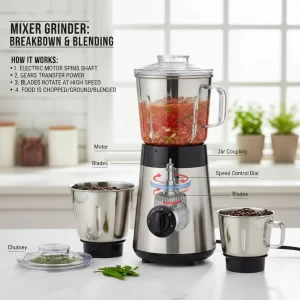
A mixer grinder is a versatile kitchen appliance that combines the functions of a mixer and a grinder. At its core, it consists of a powerful electric motor housed in a base unit, which drives a set of sharp, rotating blades inside detachable jars. The motor’s power, measured in watts, determines its strength and efficiency. The jars hold the ingredients, and the blades perform the action—chopping, pulverizing, or blending. While a mixer simply combines ingredients and a blender primarily handles liquids, a mixer grinder is designed to handle tough dry grinding, wet grinding, and mixing, making it uniquely suited for a wide range of mixer grinder applications. Understanding the different mixer grinder categories is key to finding a machine that performs all these tasks effectively for your specific requirements.
Classification of Mixer Grinders
Mixer grinders are broadly classified based on their intended use, motor power (wattage), jar capacity, and specific applications. This classification helps users identify the right machine for their environment, whether it’s a small home or a large restaurant. The main mixer grinder categories include:
- Domestic Mixer Grinder
- Commercial Mixer Grinder
- Heavy Duty Mixer Grinder
- Juicer Mixer Grinder (JMG)
- Portable / Mini Mixer Grinder
Understanding these distinct mixer grinder types will help you make a more informed and practical purchasing decision.
Domestic Mixer Grinder (For Home Use)
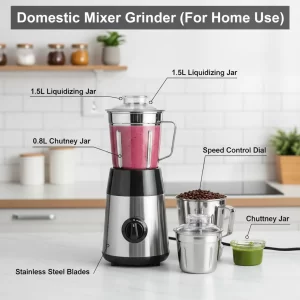
A domestic mixer grinder is the standard model designed for everyday household cooking. These appliances are built to handle the grinding and mixing needs of a typical family, offering a balance of performance, size, and affordability. They usually come with a motor ranging from 500W to 1000W, which is sufficient for most daily tasks. These are the most common kitchen mixer grinder types found on countertops.
The standard set includes three jars: a large wet grinding jar (1.2L-1.5L) for batters, a medium dry grinding jar (0.8L-1.2L) for spices, and a small chutney jar (0.3L-0.5L). While efficient, their noise level can be noticeable, and they come with essential safety features like overload protection.
Applications:
- Grinding chutneys and pastes
- Powdering spices
- Preparing batters for dosas and idlis
- Blending smoothies and milkshakes
Pros & Cons:
- Pros: Energy-efficient, compact, and affordable.
- Cons: Not designed for continuous heavy use and may struggle with extremely hard ingredients.
A commercial mixer grinder is a robust machine built to withstand the high-volume demands of professional kitchens like those in hotels, restaurants, and canteens. These grinders feature powerful motors, typically ranging from 750W to over 2000W, allowing for fast and continuous operation. The build quality is superior, often featuring a durable metal body and a 100% copper motor to handle long working hours without overheating.
Jars for these models are larger, holding several liters to process ingredients in bulk. Due to their power and durability, they are the best mixer grinder type for any food business.
Applications:
- Bulk grinding of spices and masalas in restaurants.
- Preparing large quantities of batter and purees in cloud kitchens.
- Continuous use in canteens and catering services.
Advantages & Limitations:
- Advantages: Capable of long, continuous operation and deliver fast output.
- Limitations: They are expensive, consume more electricity, and are much bulkier and noisier than domestic models.
Heavy Duty Mixer Grinder (For Industrial & Professional Use)
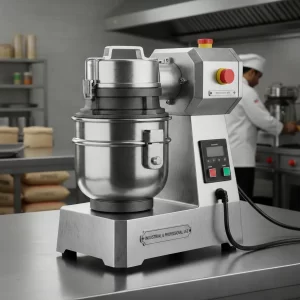
A heavy duty mixer grinder is a step above commercial models, engineered for the most demanding industrial applications. While often confused with commercial models, heavy-duty units are designed for even more intense and specialized tasks, such as those in food processing units or large catering operations. They boast extremely powerful motors with high torque and RPM, along with advanced overload protection to prevent motor burnout under extreme stress.
These machines are best suited for businesses that rely on grinding as a core part of their production process.
Best Suited For:
- Sweet shops making large batches of pastes and flours.
- Catering services preparing food for hundreds of people.
- Food processing units that package and sell ground spices or flours.
This is one of the more specialized mixer grinder types within the broader commercial mixer grinder categories.
Juicer Mixer Grinder (JMG)
A juicer mixer grinder, or JMG, is a multi-functional appliance that combines a standard mixer grinder with a juicer. These kitchen mixer grinder types come with the usual set of grinding jars plus a separate juicer jar, which often includes a mesh filter to separate pulp from the juice. This makes it a versatile tool for those who want to perform grinding tasks and enjoy fresh fruit and vegetable juices without buying two separate appliances.
A JMG is a great space-saving solution for modern kitchens. However, the juicing function is often not as efficient as a dedicated standalone juicer.
Pros & Cons:
- Pros: Multi-functional, saving space and money.
- Cons: Juicing performance might be average, and the appliance can require more maintenance and cleaning.
Mini / Portable Mixer Grinder
The mini or portable mixer grinder, also known as a bullet blender, is a compact and convenient appliance designed for quick, small-scale tasks. With a low-wattage motor and a small footprint, these mixer grinder types are perfect for individuals with limited kitchen space or those who travel. They are ideal for making single-serving smoothies, protein shakes, or grinding a small amount of coffee beans or spices.
However, their capacity is limited, and they are not powerful enough for hard grinding tasks like preparing idli batter or pulverizing turmeric.
Ideal For:
- Bachelors or students living in dorms.
- Fitness enthusiasts for making protein shakes.
- Travelers who need a compact blending solution.
Mixer Grinder Comparison
Choosing the right machine can be easier with a direct comparison. This table highlights the key differences between various mixer grinder types.
| Feature | Domestic Mixer Grinder | Commercial Mixer Grinder | Heavy Duty Mixer Grinder |
| Power (Watt) | 500W – 1000W | 750W – 2000W | 1000W – 3000W+ |
| Capacity | Small to Medium | Large | Extra Large |
| Usage Type | Daily home use | Business use | Industrial use |
| Price Range | Low to Medium | High | Very High |
| Lifespan | 3-7 years | 5-10+ years | 8-15+ years |
This mixer grinder comparison shows a clear progression in power, price, and durability from domestic to heavy-duty models.
How to Choose the Best Mixer Grinder Type?
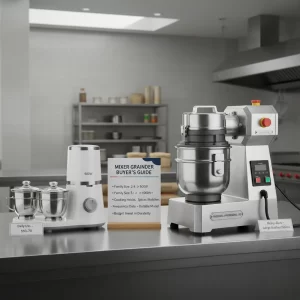
Selecting the best mixer grinder type depends entirely on your personal needs. Use this buyer’s guide to make the right choice:
- Family Size: For a small family of 2-4, a 500W-750W domestic model is perfect. A larger family might need a 1000W model.
- Cooking Habits: If you frequently grind hard spices like turmeric or make large batches of batter, opt for a heavy-duty model with 900W or more power.
- Frequency of Use: For occasional use, a basic domestic grinder is fine. For daily, intensive use, invest in a more durable model.
- Budget: Determine your budget, but remember that a slightly more expensive, durable model is often cheaper in the long run.
If you’re a home user, a domestic mixer grinder will serve you well. For any business, a commercial or heavy duty mixer grinder is a necessary investment.
Common Mixer Grinder Applications
The versatility of a mixer grinder is evident in its wide range of mixer grinder applications. Common uses include:
- Spice Grinding: Creating fresh, aromatic spice powders from whole spices.
- Batter Making: Preparing smooth batters for idlis, dosas, and vadas.
- Juices & Smoothies: Blending fruits and vegetables into healthy drinks.
- Dry Fruit Grinding: Powdering nuts and dry fruits for sweets and desserts.
- Commercial Grinding: Processing large quantities of ingredients for food businesses.
Conclusion
Understanding the different types of mixer grinders is crucial for making a purchase that will serve you well for years. From the compact portable blender to the mighty heavy-duty machine, each has a specific purpose. By evaluating your cooking needs, family size, and budget, you can easily select the best mixer grinder type for your kitchen. A thoughtful choice ensures you have a reliable appliance ready for any culinary challenge.
Also, Read: Top 30 Commercial Mixer Grinder Brands in B2B Industries
FAQs on Mixer Grinder Types
Which mixer grinder is best for home use?
A domestic mixer grinder with a 750W motor is generally considered the best all-rounder for home use, as it can handle most daily grinding tasks efficiently.
What is the difference between a commercial and a heavy-duty mixer grinder?
A commercial mixer grinder is for restaurants and hotels, while a heavy-duty one is for more intensive industrial applications like food processing units, offering even greater power and continuous run-time.
How many watts is enough for a mixer grinder?
For basic home use, 500W is sufficient. For regular Indian cooking, 750W is ideal. For heavy grinding tasks, 900W or more is recommended.
Can a domestic mixer grinder be used commercially?
No, using a domestic model for commercial purposes will quickly lead to motor burnout and void its warranty. It is not built for the volume or continuous operation required in a business setting.