

Mixer Grinder Jar Types & Their Uses Explained 2026
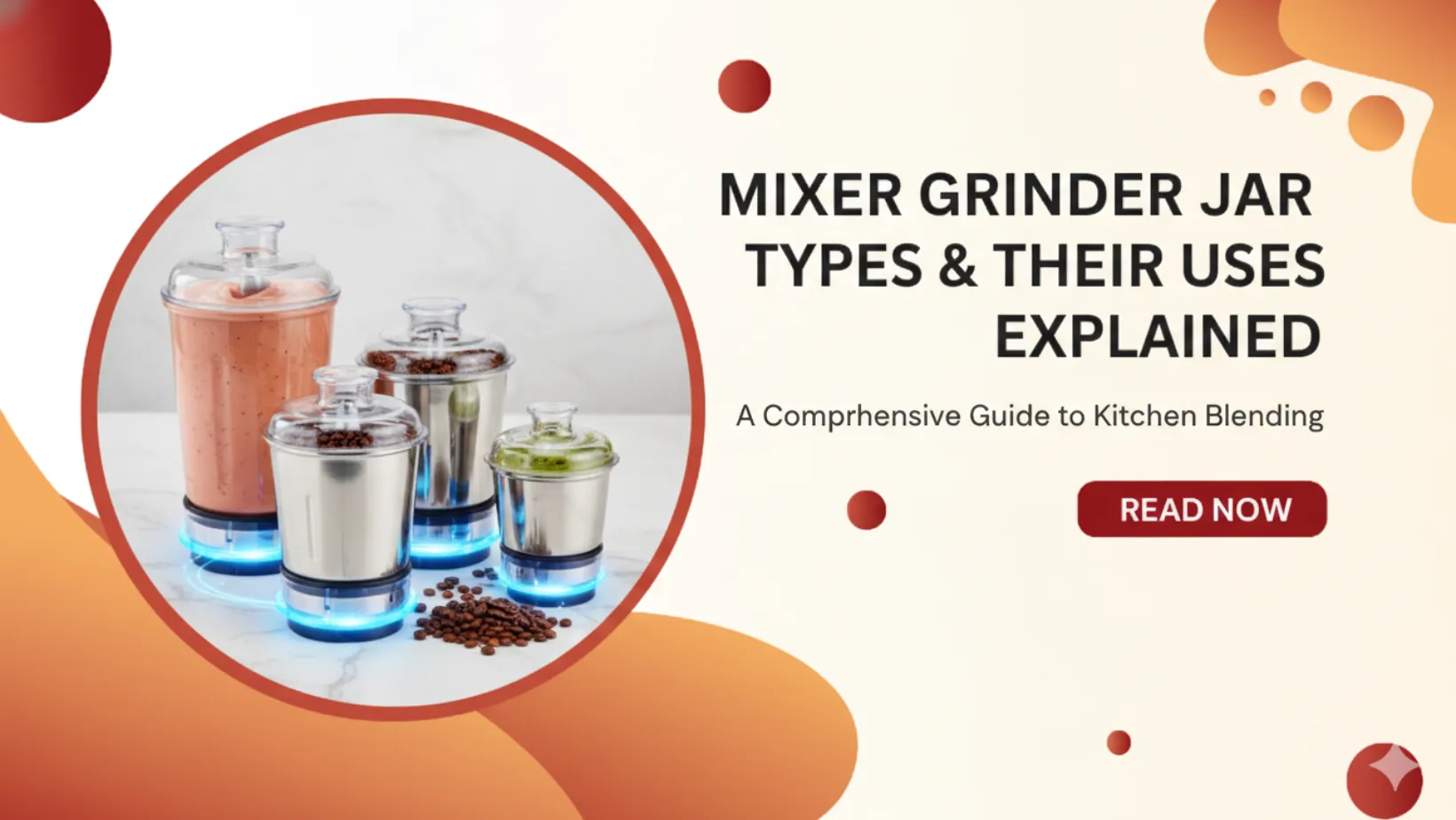
If you step into any kitchen, especially in India or South Asia, you’ll notice the mixer grinder standing as one of the most utilized and reliable appliances. This indispensable machine is the driving force behind everything from finely ground spices to silky batters, making it an essential tool for countless culinary requirements. Yet, most people pay attention primarily to the mixer’s wattage or the reputation of the brand, often overlooking the jars—the very components that perform the grinding, mixing, and blending magic. Understanding mixer grinder jar types is absolutely essential if you wish to make the most of your appliance, maximize its efficiency, and elevate your kitchen results. Each jar is uniquely designed for specific tasks, and using them appropriately can transform the way you cook.
Mixer grinder jars are not just accessories; they are purpose-built, ergonomically designed, and engineered to give you optimal results for a wide range of culinary applications. This comprehensive guide goes deep into the world of mixer grinder jars—their designs, functions, best uses, material quality, size options, and associated accessories. Whether you are just setting up your home kitchen, considering an upgrade, or managing a busy commercial kitchen, this extensive resource will help you select, use, and maintain the right jars to meet all your needs.
Introduction: The Role of Jars in Mixer Grinders
The jar is where all the action happens. It’s where your raw, fresh, and sometimes tough ingredients are transformed into pastes, purees, batters, powders, and juices. The right jar ensures smooth operation of your appliance, efficient conversion of ingredients, and consistent results every single time. Moreover, jars are pivotal in guaranteeing the longevity of the motor by spreading the grinding load evenly and preventing overworking and overheating.
It is all too common for home cooks to compromise on jar quality when selecting a mixer grinder. The temptation to choose the flashiest machine often overshadows the need for reliable, durable, and versatile jars. For both domestic and commercial kitchens, mastering mixer grinder jar types and their correct uses means unlocking countless culinary possibilities, saving time, and boosting confidence in the kitchen.
Why Do Different Mixer Grinder Jar Types Matter?
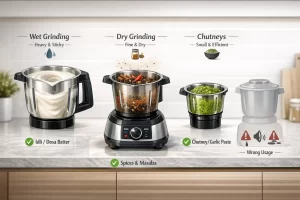
Different preparations in your kitchen require different approaches—there is no “one size fits all” jar. Attempting to use a single, generic jar for every task results in subpar outcomes, such as uneven grinding, food wastage, and increased wear and tear on the motor and blades.
For example, wet grinding of soaked rice or dal for batter is drastically different from dry grinding hard spices like pepper or cinnamon. Batters are heavy and sticky, requiring a strong vortex and robust blades, whereas spices need fine, dry grinding without overheating. Chutneys and pastes demand concentrated, efficient movement in small quantities so that every bit is ground properly with minimal residue on the sides. Using the ideal jar for each purpose ensures efficacy, reduces energy consumption, and helps maintain the sharpness and quality of your blades for longer.
Moreover, the wrong jar can cause kitchen mishaps like leaks, spillage, jarring noises, and overloading of the motor. Each jar in a mixer grinder jar set is designed to work in harmony with the appliance’s speed, torque, and grinding action. This detailed matching not only preserves taste and texture but also ensures safety and appliance durability.
Anatomy of a Mixer Grinder Jar
Before diving into the specific types of jars, it’s vital to understand the anatomy of a typical mixer grinder jar. Most jars, whether designed for home or commercial use, share some fundamental components which contribute to their unique performance:
- Body of the Jar: The jar body is usually made from stainless steel or high-grade food safe plastic (polycarbonate). It’s shaped for a specific grinding action—tall and cylindrical for liquidizing, short and broad for dry or multipurpose grinding.
- Blades: The heart of any jar, blades are made of high-quality, hardened stainless steel. Different jars use specific blade shapes for their designated tasks—wet grinding blades are angled and sharp, dry grinding blades are flatter and sometimes serrated.
- Handle: Jar handles are ergonomically designed and securely riveted or molded. This ensures a stable grip even when jars are full and heavy.
- Lid: Lids may be flat or domed, depending on the jar type. They ensure that liquids and particles remain inside during vigorous operation. Many lids feature tight rubber gaskets for leak-proof use and locking mechanisms for added safety.
- Lid Cap or Measuring Cap: Some lids come with a removable small cap to add ingredients or monitor consistency without stopping the motor.
- Spout/Pouring Lip: Convenient designs include a well-formed lip for easy pouring of liquids or batter.
- Coupler: The part underneath the jar connects to the motor’s rotating spindle. High-end jars offer metal or high-quality nylon couplers that withstand the appliance’s torque and repeated use.
- Flow Breakers: Grooves or bulges built into the jar walls stop ingredients from sticking and push them back towards the blade, ensuring uniform grinding.
A well-designed jar not only makes grinding easy but extends the whole appliance’s life by reducing strain on the motor and facilitating easy cleaning.
Also, Read: Best Commercial Mixer Grinder in India for Restaurants & Hotels
Overview of Common Mixer Grinder Jars
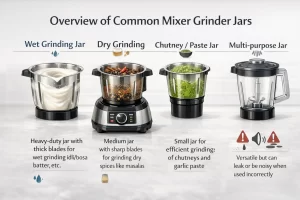
1. The Liquidizing Jar (Wet Grinding Jar)
Among all mixer grinder jar types, the liquidizing or wet grinding jar is usually the largest, with a typical capacity of 1.2 to 1.5 liters or more. The tall, often inverted bell shape facilitates the swirling of ingredients, creating a strong vortex that ensures everything is ground or blended to a consistent, silky finish.
Wet grinding jars are essential for traditional Indian food preparations. Whether it’s South Indian idli or dosa batter, thick shakes, nut butters, or lassi, the wet jar is your go-to. The robust design ensures that soaked rice, dal, coconut, or vegetables are ground finely without overheating or getting stuck.
- Example Applications: Grinding soaked dal for vadas, mixing pancake or crepe batter, preparing thick milkshakes with frozen fruit, or pureeing large batches of tomatoes for sauce.
- Quality Note: Always opt for a stainless steel mixer grinder jar for wet grinding because acidic ingredients and high moisture content tend to corrode lower quality metals and stain plastics over time.
- Pro Tip: Do not overload the jar—leave some headspace for liquid to circulate and avoid spillage through the lid.
2. The Dry Grinding Jar (Multipurpose Jar)
This is the ‘workhorse’ of the comparative mixer grinder jar types set, with a typical capacity between 0.8 and 1.0 liters. Designed to pulverize dry ingredients into a fine, uniform powder, it can handle everything from roasted spices to coffee beans to granulated sugar. Dry grinding jars are generally shorter and broader, allowing for easy tossing of ingredients and even spreading of heat.
- Example Applications: Making coriander or garam masala powders, grinding sugar for icing, preparing nut flours for gluten-free baking, or turning roasted coffee into powder for that perfect brew.
- Material & Hygiene: Food-safe stainless steel with a tight-clicking lid is crucial, as powdery ingredients tend to fly, seep into jar joints, and cause residue buildup or bacterial growth if not cleaned meticulously.
- Pro Tip: Pulse action works best for dry grinding—run the appliance in short bursts to prevent spice oils from overheating and clumping the powder.
3. The Chutney Jar
Every mixer grinder jar set comes with a tiny, mighty jar intended specifically for chutneys, pastes, and concentrate preparations. Often holding 0.3 to 0.5 liters, its compact size makes it ideal for grinding small quantities. The blade sits extremely close to the base, ensuring even just a few cloves of garlic or a tiny handful of mint gets evenly ground into a paste.
- Example Applications: Making classic coconut or coriander chutney, fresh pesto, dry masala for a single dish, ginger-garlic paste for curries, or sesame/poppy seed paste for sauces.
- Culinary Tip: For thick chutneys, add just a few drops of water at a time and scrape down the sides with a spatula for a super smooth finish.
- Heat Caution: With smaller jar capacity, friction builds up quickly. Use short, pulsed bursts to keep delicate herbs and spices from heating up unnecessarily.
Specialized and Commercial Mixer Grinder Jars
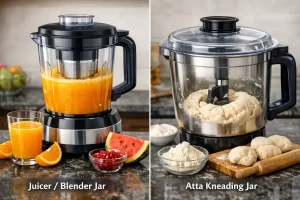
Modern cooking needs are more diverse than ever, and manufacturers have introduced a range of specialized jars and mixer grinder accessories to enhance versatility.
The Juicer or Blender Jar
The juicer jar is typically constructed from high-quality food-grade polycarbonate and features a central filter mesh. This jar is indispensable if you enjoy fresh juice, smoothies, or dietary fiber, and often comes with high-end mixer grinders.
- Example Applications: Extracting mousambi or orange juice, blending watermelon or pomegranate, or making coconut milk from freshly grated coconut.
- Ease of Use: The mesh filter separates the pulp automatically, providing clear juice with minimal fuss.
- Cleaning Note: Polycarbonate is less durable than stainless steel—handle with care and avoid abrasive scrubbers.
The Atta Kneading Jar
Kneading dough for chapatis or bread can be strenuous work. The atta kneading jar, often available as a special accessory, comes with different blades optimized for converting flour and water into soft, pliable dough within minutes.
- Example Applications: Preparing chapati, naan, pizza, or bakery dough.
- Tip: Follow manufacturer guidelines for ingredient quantities, as overloading can stress both blade and motor.
The Whipping Jar
Not all brands include a whipping jar, but it’s highly useful for those who enjoy baking or making desserts.
- Example Applications: Whipping cream for cakes, making mayonnaise, or beating eggs for omelets.
Commercial Mixer Grinder Jars
In restaurants and catering, the regular home jars simply do not suffice. Commercial mixer grinder jars are engineered to manage large volumes, run for longer periods, and handle tough ingredients in bulk.
- Build Quality: These jars are made from thick, heavy-duty stainless steel, include industrial-grade locking mechanisms and couplers, and come in sizes ranging from 2 liters to above 5 liters.
- Example Uses: Grinding masala in bulk, making 5-liter batches of batter, or commercial-scale dry spice powders.
- Durability: Designed for abuse—if you need continuous performance, always insist on jars built for commercial mixer grinder use.
Also, Read: Mixer Grinder Buying Guide for Home & Commercial Use
Materials and Build Quality
Stainless Steel Mixer Grinder Jar
Stainless steel is the gold standard when it comes to durability, safety, and hygiene. Grade 304 stainless steel is widely regarded as the best due to its corrosion and rust resistance properties.
- Benefits: Non-reactive to acidic or alkaline ingredients, doesn’t leach toxins or odors, maintains structural integrity at high speeds and temperatures.
- Drawbacks: Slightly heavier and costlier, but a worthy investment for longevity.
Food Grade Mixer Grinder Jar (Plastic / Polycarbonate)
High-quality food-grade plastics are sometimes used for juicer and blender jars. They’re lightweight and transparent, making it easy to monitor consistency.
- Benefits: See-through for easy observation, lighter for day-to-day tasks.
- Drawbacks: Prone to cracking or clouding with years of use; can stain with colored foods like turmeric or beetroot.
Jar Accessories: Flow Breakers, Handles, and Lids
- Flow Breakers: Found in quality steel jars, these molded ridges disrupt the circular flow, sending ingredients back toward the blades for even, faster grinding.
- Handles: Ensure the handle is generous and strongly attached—weak handles can detach with repeated rough use, especially in larger jars.
- Lid Variety: Flat lids keep dry powders sealed in, while domed lids offer room for rising liquids or air, crucial for wet grinding and whipping tasks.
How to Choose the Right Mixer Grinder Jars
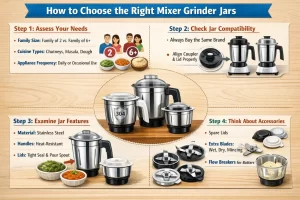
Choosing the perfect jar isn’t just about matching it to your recipes; it’s about understanding your family’s or business’s volume and variety needs.
Step 1: Assess Your Needs
- Family Size: A family of two may not need the same jar capacities as one of six or more.
- Cuisine Types: If you regularly make dough, plenty of chutneys, or grind masala daily, your ideal jar set will differ from someone who just needs a blender.
- Appliance Frequency: Frequent users should prioritize commercial-grade jars for durability.
Step 2: Check Jar Compatibility
- Not all jars are interchangeable between different mixer grinder models or brands. Always buy from your appliance’s own brand or check that the coupler and lid align perfectly to prevent leaks or motor damage.
Step 3: Examine Jar Features in Detail
- Material: Insist on food-grade, stainless steel for hygiene and durability.
- Handles: Look for ergonomic, heat-resistant design if you often heat or process hot ingredients.
- Lids: Check for tight seals, easy pour spouts, and convenient filling/measuring caps.
Step 4: Think About Accessories
- Spare Lids: These often get misplaced.
- Extra Blades: For different textures—some brands offer “wet,” “dry,” “mincing,” or “whipping” blades.
- Flow Breakers: Better for sticky batters like idli or dosa, as they help in generating fluffy, aerated mixtures.
Food Grade & Safety Standards
When it comes to any jar touching your food, food grade mixer grinder jar construction and safety certification are non-negotiable. Inferior materials can leach toxins and off-flavors, especially under high pressure or heat.
How to Check for Food Grade Quality
- Look for “BPA-free” marking on plastics.
- Stainless steel jars should be labeled as “Food Grade 304” or equivalent.
- Trusted brands will display ISI, CE, or other safety certifications on jars and packaging.
Importance in the Commercial Context
For commercial mixer grinder jars, compliance with food safety norms is critical for health department regulations and for protecting your clientele from contamination.
Jar Accessories: Lids, Handles, Blades & Flow Breakers
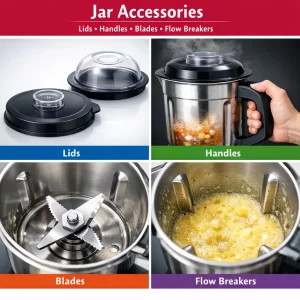
Each accessory plays an essential role in the grinding process, directly impacting convenience, safety, and final results.
Lids
- Flat lids are great for keeping powders contained during dry grinding, while dome-shaped lids are excellent for handling frothy wet mixtures.
- Airtight, snug fits prevent spills and preserve freshness. Some lids offer measurement marks, enabling you to add precise amounts of water or other ingredients mid-process.
Handles
- Long, solid handles make pouring safe and easy and should be molded or riveted securely.
- Insist on heat-resistant materials, especially if you often process hot foods.
Blades
- The right blade can transform the action from chopping to mincing, grinding to whipping.
- For best results, ensure blades are sharp, securely fitted, and replaced as soon as they show signs of dulling or rust.
Flow Breakers
- A detail often missed, flow breakers improve the efficiency of grinding wet, sticky ingredients, reducing overall motor load and grind time.
Tips for Maintaining Mixer Grinder Jars
Proper maintenance can add years to the life of your mixer grinder jars and ensure impeccable taste and hygiene.
- Clean Immediately After Use: Spices and batters dry quickly and become tough to remove if left for long.
- Avoid Harsh Scrubbing: Gentle cleaning with mild detergent and a soft brush preserves the jar’s surface.
- Dry Thoroughly: Especially important for steel jars—to prevent rusting of the blade base and coupler.
- Check and Tighten Attachments: Regularly check that handles, blades, and base couplers are firmly fitted.
- Do Not Overload: Respect capacity limits to avoid leaks, spills, and undue stress on the blade and coupler.
- Service Blades: Replace or sharpen blades as needed for peak performance.
- Store Safely: Stack jars with lids off, allowing air flow and preventing residual odors or moisture buildup.
Frequently Asked Questions about Mixer Grinder Jars
Q: Can I use the dry jar for wet grinding?
It’s better not to! The dry jar’s flat blades and broad shape can’t generate the vortex needed for a smooth, fluffy wet grind. Conversely, using it with water often results in leaks, uneven paste, and can even damage the jar coupler.
Q: Are plastic jars safe for grinding hot foods?
Most plastics are not designed to withstand the sustained heat of hot food grinding. Unless they are explicitly marked as heat-resistant, stick with stainless steel jars for hot or acidic items.
Q: How often should I replace mixer grinder jars?
With proper maintenance, a good quality stainless steel jar will last for several years. Replace jars if you notice cracks, persistent leaks, or deformed bases that affect coupling.
Q: Is it safe to buy jars from a different brand than my mixer grinder?
Mostly, it’s unwise since couplers, blade fitting, and lid sizes can differ, leading to improper operation or leaks. Always opt for jars recommended by your appliance manufacturer.
Conclusion
In the world of kitchen appliances, the mixer grinder stands tall—but it is the jars that truly determine its effectiveness, versatility, and safety. From the large wet grinding jar tasked with creating creamy batters, to the efficient dry grinding jar for masalas and flours, and finally, the essential chutney jar mixer grinder for concentrated pastes, every jar has a vital role. When you also consider specialized jars and robust commercial mixer grinder jars for high-output settings, it becomes clear that a thoughtful approach to jar selection is crucial.
High-quality, food-safe, purpose-built mixer grinder jars are an investment in taste, nutrition, appliance longevity, and safety for you and your loved ones. Take the time to clean and maintain your jars, use them as intended, and always match the right jar to the right task. By doing so, you ensure that each meal you prepare is fresh, delicious, and a testament to your kitchen expertise—powered by the smart use of your mixer grinder and its many jars.