

Mixer Grinder Applications: Versatile Uses for Every Kitchen 2026
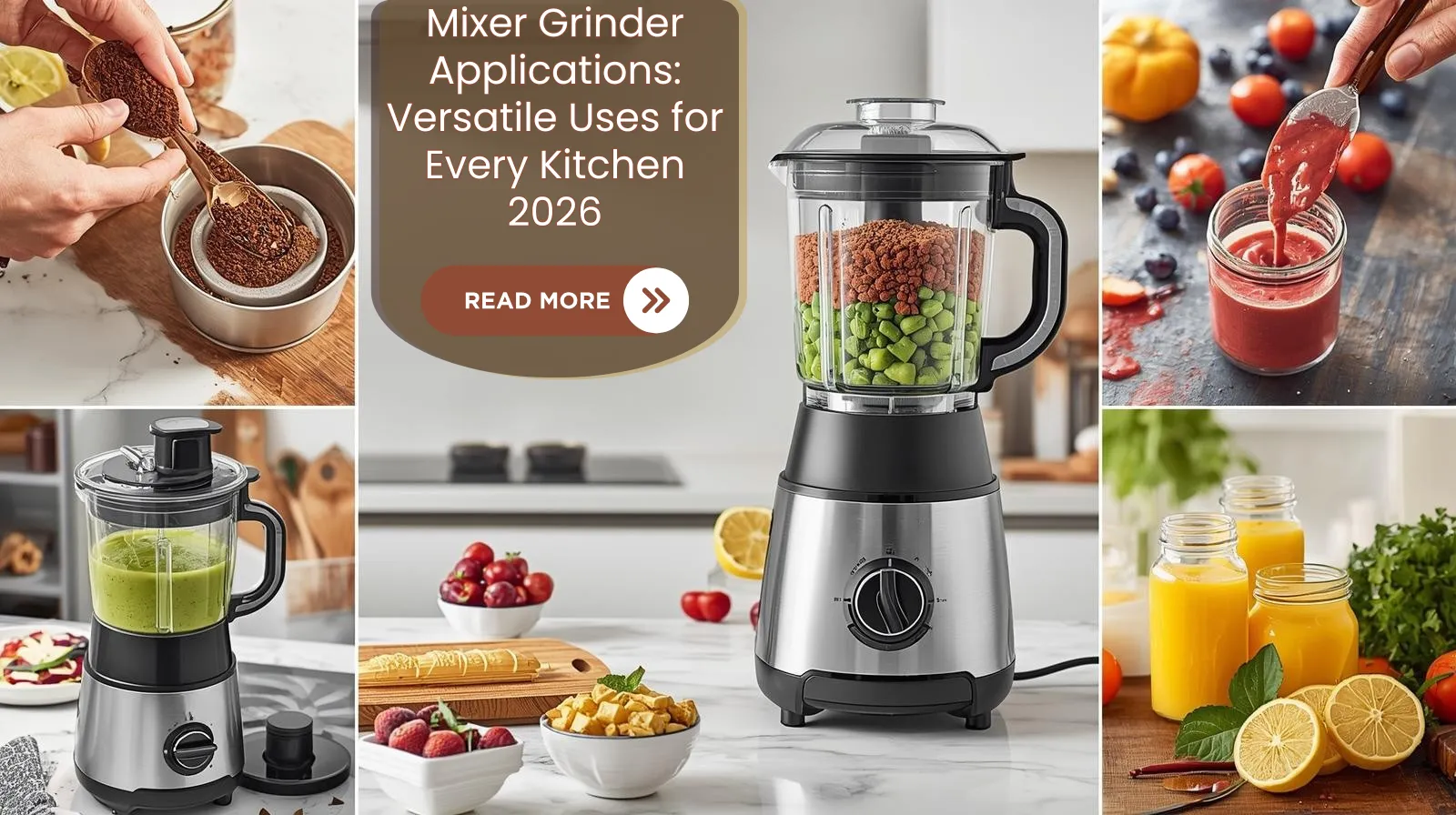
In the vast landscape of culinary tools, few machines can claim the status of being truly indispensable. The mixer grinder is one such appliance. From the bustling kitchens of five-star hotels to the modest countertops of home cooks, this powerhouse machine has revolutionized how we prepare food. Understanding the full scope of mixer grinder applications reveals just how integral this device is to modern cooking, particularly in regions with rich culinary traditions like India.
This comprehensive guide explores the diverse world of mixer grinder uses, spanning from simple home recipes to complex commercial operations. Whether you are a professional chef looking for the best mixer grinder for restaurant efficiency or a home cook wanting to expand your repertoire, this deep dive into kitchen appliance usage will show you how to unlock the full potential of your machine. We will explore commercial mixer grinder applications, its role as a food preparation mixer grinder, and why it remains a staple of professional kitchen equipment and a household favorite across mixer grinder India markets.
The Heart of the Kitchen: Why Mixer Grinder Applications Matter
To appreciate the machine, one must first appreciate the task. Cooking is rarely just about applying heat; it is about preparation. Chopping, grinding, blending, mixing, whipping—these are the foundational steps of almost every dish. Before the advent of electricity in the kitchen, these tasks were labor-intensive, performed with mortar and pestle or grinding stones. The mixer grinder condensed hours of manual labor into minutes of electrical efficiency.
The range of mixer grinder applications is vast because the machine itself is a chameleon. With different jars and blades, it transforms from a spice grinder to a smoothie maker, from a batter mixer to a chutney creator. This versatility is why it is not just a luxury but a necessity. In the context of mixer grinder India, where cuisine relies heavily on fresh spice blends (masalas), wet batters (for idli and dosa), and chutneys, the appliance is virtually the heart of the kitchen.
But its utility isn’t limited to traditional Indian cooking. Modern mixer grinder applications extend to making nut butters, smoothies, soups, sauces, and even kneading dough. As we explore these uses, you will see how this single piece of equipment can replace multiple single-purpose gadgets, saving both counter space and money.
Home Mixer Grinder Uses: Elevating Everyday Cooking
For the home cook, the mixer grinder is the ultimate sous-chef. Home mixer grinder uses are incredibly varied, catering to breakfast, lunch, dinner, and everything in between.
1. The Art of Spices: Dry Grinding
One of the most primary mixer grinder applications is dry grinding. Store-bought spice powders often lack the potency and aroma of freshly ground spices.
- Masalas and Curry Powders: A small jar with a flat blade is perfect for turning whole coriander seeds, cumin, dried chilies, and cinnamon sticks into fine powders.
- Coffee Grinding: Many robust mixer grinders can handle coffee beans, giving you a fresh brew without needing a separate burr grinder.
- Grain Flour: For gluten-free requirements, home cooks use powerful mixers to grind rice, oats, or chickpeas into flour.
2. The Fresh Factor: Wet Grinding
Wet grinding is where the mixer grinder truly shines, especially in Indian households.
- Idli and Dosa Batter: This is perhaps the most demanding of home mixer grinder uses. Soaked rice and lentils must be ground into a smooth, fluffy paste. A good mixer grinder handles this heavy load without overheating, aerating the batter for better fermentation.
- Chutneys and Dips: From coconut chutney to fresh pesto, the wet grinding jar blends herbs, nuts, and liquids into creamy accompaniments in seconds.
- Curry Pastes: Ginger-garlic paste, onion-tomato bases, and Thai curry pastes are staples made effortless by the mixer grinder.
3. Blending and Liquidizing
The larger jars are designed for liquidizing, opening up a world of beverages and soups.
- Smoothies and Milkshakes: Crushing ice and blending fruits into silky drinks is a daily task for many mixers.
- Pureeing Soups: Instead of using an immersion blender, many cooks transfer cooled vegetables to a mixer grinder to achieve a restaurant-quality silkiness for soups and bisques.
- Baby Food: For parents, the mixer grinder is a tool for making healthy, preservative-free purees for infants.
4. Preparation Shortcuts
Beyond the obvious, savvy cooks find creative mixer grinder applications:
- Breadcrumbs: Stale bread is blitzed into crumbs in seconds.
- Powdered Sugar: Regular granulated sugar is spun into icing sugar for baking.
- Coconut Milk: Grating fresh coconut and blending it with warm water extracts rich, fresh coconut milk.
Commercial Mixer Grinder Applications: Powering the Industry
While home use focuses on variety, commercial mixer grinder applications focus on volume, speed, and consistency. In a professional setting, time is money. A mixer grinder for restaurant use is built differently—it has higher wattage, sturdier components, and is designed to run for longer periods.
The Heavy-Duty Demands of Restaurants
A mixer grinder for restaurant kitchens is a lifeline.
- Bulk Masala Preparation: Restaurants often make their signature spice blends in bulk at the start of the week. A commercial mixer grinder can process kilos of spices in one go, ensuring consistent flavor across hundreds of dishes.
- Gravy Bases: Indian restaurant cooking often relies on base gravies (onion-tomato, cashew-melon seed). These need to be produced in massive quantities. Commercial mixer grinder applications involve grinding boiled onions and nuts into incredibly fine pastes to give gravies their characteristic rich texture.
- Marinades: For tandoori items and kebabs, thick, smooth marinades are essential. Industrial mixers ensure the marinade is emulsified correctly to coat the meat evenly.
Mixer Grinder for Hotel Kitchen Operations
In a hotel, the scale is even larger. A mixer grinder for hotel kitchen setups might be separated by station (Garde Manger, Hot Kitchen, Bakery).
- Bakery and Confectionery: Chefs use heavy-duty mixers for grinding sugar, making almond flour (macarons), or praline pastes. Some powerful models are even used for quick kneading of small batches of dough.
- Breakfast Buffets: The juice and smoothie counters at hotel buffets rely heavily on commercial blenders and mixers to churn out fresh drinks on demand for hundreds of guests.
- Banquet Prep: When cooking for a wedding or conference, the volume of ginger-garlic paste or green chili paste required is immense. Industrial mixer grinder applications here are all about raw throughput power.
Specialized Commercial Uses
- Nut Butters: Health food cafes use specialized high-torque mixer grinders to turn peanuts, almonds, and cashews into butter. This requires sustained power to break down the oils without burning out the motor.
- Coconut Scraping: In coastal cuisine restaurants, attachments are used for scraping fresh coconuts rapidly, a task that is slow and dangerous by hand.
The Evolution of Food Preparation Mixer Grinder Technology
The scope of mixer grinder applications has expanded because the technology has evolved. It is no longer just a motor and a blade.
Variable Speed and Pulse
Modern kitchen appliance usage emphasizes control. The ability to vary speed allows for different textures.
- Low Speed: Essential for coarse grinding (like salsa or crushed spices) where you don’t want a paste.
- High Speed: Required for smooth purees and fine powders.
- Pulse: Crucial for chopping vegetables or crushing ice without over-processing.
Specialized Blades
The “one blade fits all” approach is fading.
- Pounding Blades: Some mixers now come with blunt blades designed to mimic the pounding effect of a mortar and pestle, preserving the essential oils of spices rather than burning them with high-speed friction.
- Mincing Blades: Specific blades for mincing meat allow the mixer grinder to function as a meat processor, expanding the food preparation mixer grinder capabilities.
- Fruit Filters: Attachments that filter out pulp and seeds while blending juices are becoming common, refining the beverage output.
Motor Durability and Cooling
For commercial mixer grinder applications, motor cooling is vital. Advanced ventilation systems and circuit breakers (overload protectors) allow these machines to perform heavy tasks like grinding turmeric or soaking wet rice without the downtime of overheating.
Mixer Grinder India: A Cultural Icon
To discuss mixer grinder applications without mentioning India would be incomplete. In the Indian market, the mixer grinder is arguably the most important appliance after the stove.
- The “Mixie” Culture: In India, it is affectionately called the “mixie.” It is the workhorse of the kitchen. The unique requirements of Indian cooking—tough grinding of turmeric, sticky wet grinding for batters—have driven innovation in the mixer grinder India sector.
- Global Export: Because Indian mixer grinders are built to withstand such heavy-duty usage, they are exported globally as robust examples of professional kitchen equipment. A machine that can grind dried turmeric root can easily handle a fruit smoothie, making them highly desirable for durability.
- Versatility Standard: In the West, one might have a blender, a food processor, and a coffee grinder. In India, the mixer grinder combines all three. This multipurpose nature is the core of its design philosophy.
Choosing the Right Machine for the Application
Understanding mixer grinder applications helps in selecting the right equipment. Not every mixer is suitable for every task.
Wattage and Power
- 500 Watts: Suitable for basic home mixer grinder uses like soft chutneys, milkshakes, and grinding soft spices.
- 750 Watts: The gold standard for a versatile home kitchen. It handles idli batter and tougher spices.
- 1000+ Watts: This is the territory of the mixer grinder for restaurant or commercial mixer grinder applications. These machines provide the torque needed for continuous heavy grinding.
Jar Configuration
- Chutney Jar (0.3L – 0.5L): Essential for small quantities of pastes and spices.
- Dry/Wet Grinding Jar (1L – 1.2L): The general-purpose jar for batters and powders.
- Liquidizing Jar (1.5L+): For shakes, soups, and lassis.
- Food Processing Bowl: Some premium models include a bowl for chopping, slicing, and kneading, further expanding kitchen appliance usage.
Maximizing Efficiency in Professional Kitchens
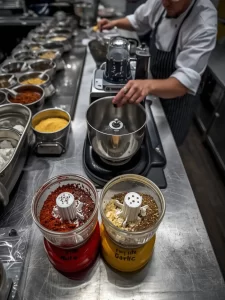
For chefs, optimizing mixer grinder applications is about workflow.
- Mise en Place: In a professional kitchen, the mixer grinder is part of the mise en place (preparation). Chefs use it to prep all pastes and powders before service begins.
- Cross-Contamination Prevention: In mixer grinder for hotel kitchen setups, color-coded jars are sometimes used to prevent allergens (like nuts) or strong flavors (like garlic) from contaminating desserts or mild dishes.
- Maintenance for Performance: A dull blade cannot grind efficiently. Regular maintenance—sharpening blades and checking couplers—ensures the food preparation mixer grinder delivers consistent texture, which is crucial for recipe standardization.
Safety in Mixer Grinder Applications
With great power comes the need for safety, especially with commercial mixer grinder applications where machines run at high speeds.
- Locking Mechanisms: Modern applications rely on safety locks that prevent the motor from starting if the jar isn’t seated correctly.
- Hands-Free Operation: Lid locks allow chefs to operate the machine without holding the lid down, freeing their hands for other tasks—a critical efficiency booster in professional kitchen equipment.
- Overload Protection: As discussed in previous contexts, the overload switch is vital for protecting the motor during heavy applications like thick batter grinding.
Unique and Creative Mixer Grinder Applications
Beyond the standard uses, creative cooks are pushing the boundaries.
- Emulsification: Making mayonnaise or hollandaise sauce. The high speed of a mixer grinder can emulsify oil and egg yolks rapidly, provided the oil is added slowly.
- Meat Grinding/Mincing: While not a dedicated meat grinder, small pulses can mince boneless chicken or lamb for kebabs and koftas.
- Whipped Cream: With the right blade and speed, cold heavy cream can be whipped to stiff peaks in seconds.
- Homemade Cosmetics: DIY enthusiasts use small jars to blend natural face packs, scrubs, and herbal pastes, extending mixer grinder applications beyond food entirely.
The Economic Impact of the Mixer Grinder
From an economic standpoint, the mixer grinder is a cost-saver.
- For Homes: It encourages cooking from scratch. Buying whole spices is cheaper than buying powders. Making batter at home is cheaper than buying store-bought mix.
- For Businesses: A robust mixer grinder for restaurant use reduces labor costs. What would take a commis chef an hour to chop or grind by hand takes minutes by machine. It also reduces food waste by allowing kitchens to repurpose leftovers (e.g., turning stale bread into crumbs or over-ripe fruits into smoothies).
Future Trends in Mixer Grinder Applications
As kitchen appliance usage evolves, so do the machines.
- Smart Mixers: We are seeing the advent of IoT-enabled mixers that can be controlled via smartphones or have pre-programmed settings for specific recipes (e.g., a “dosa batter” button that cycles through speeds automatically).
- Noise Reduction: A major complaint has always been noise. Newer professional kitchen equipment focuses on silent motors and sound-dampening enclosures, making open kitchens more pleasant.
- Nutrient Preservation: Technology that minimizes heat transfer during grinding is gaining traction, preserving the antioxidants and vitamins in the food, catering to health-conscious consumers.
Conclusion: The Indispensable Tool
The analysis of mixer grinder applications makes one thing clear: this is not just a machine; it is a solution. It solves the problems of time, effort, and consistency in the kitchen.
For the homemaker, home mixer grinder uses provide the freedom to explore diverse cuisines and provide healthy, fresh meals for the family. For the professional, the mixer grinder for restaurant or mixer grinder for hotel kitchen is a pillar of operational efficiency. From the spice markets of mixer grinder India to the smoothie bars of the West, the appliance has cemented its place in culinary history.
Whether you are grinding tough turmeric roots, whipping up a delicate meringue, or churning out gallons of chutney for a banquet, the mixer grinder stands ready. By understanding the full breadth of food preparation mixer grinder capabilities and investing in the right equipment, you elevate your cooking from a chore to an art form. It is the ultimate testament to how commercial mixer grinder applications and domestic innovations have converged to make cooking accessible, efficient, and enjoyable for everyone.
Embrace the versatility. Explore the potential. And let the mixer grinder transform your kitchen experience.
FAQs on Mixer Grinder Applications
1. What are mixer grinder applications?
Mixer grinder applications include grinding spices, making dosa/idli batter, blending smoothies, preparing chutneys, gravies, marinades, soups, and bulk food prep in commercial kitchens.
2. Can a mixer grinder be used for both dry and wet grinding?
Yes. A mixer grinder supports both dry grinding (spices, grains) and wet grinding (batters, pastes, chutneys) using different jars and blades.
3. What are the most common home mixer grinder uses?
Common home uses include spice grinding, batter preparation, smoothies, milkshakes, curry pastes, baby food, coconut milk extraction, and powdered sugar.
4. How is a commercial mixer grinder different from a home mixer grinder?
Commercial mixer grinders have higher wattage, stronger motors, larger jars, and are designed for continuous heavy-duty use in restaurants and hotels.
5. Can mixer grinders be used in restaurants and hotels?
Yes. Mixer grinders are widely used in restaurants and hotel kitchens for bulk masala grinding, gravy bases, marinades, juices, and banquet preparation.
6. What wattage is ideal for different mixer grinder applications?
-
500W: Light home tasks
-
750W: Heavy home cooking (batters & spices)
-
1000W+: Commercial and restaurant applications
Higher wattage provides better torque and durability.
7. Can a mixer grinder replace a blender and food processor?
In most Indian kitchens, yes. A mixer grinder performs blending, grinding, and basic food processing, reducing the need for multiple appliances.
8. Is a mixer grinder suitable for making nut butter?
Yes, powerful mixer grinders can make peanut, almond, or cashew butter, though it requires pulse grinding and short cooling intervals.
9. What safety features are important in mixer grinder applications?
Important safety features include jar-lock systems, overload protection, non-slip bases, and lid locks—especially for commercial usage.
10. How do mixer grinder applications benefit professional kitchens?
They save time, reduce labor costs, ensure consistent texture, speed up prep work, and improve workflow efficiency in commercial food operations.