

Unplugged: A Complete Guide to Mixer Grinder Motor Failure 2026

A mixer grinder is the powerhouse of most kitchens, effortlessly tackling everything from tough spices to smooth batters. When it suddenly sputters, smokes, or stops working altogether, your culinary plans can grind to a halt. At the root of many issues is mixer grinder motor failure—a common, but often preventable, problem that can disrupt both home and commercial kitchens.
Understanding mixer grinder motor failure not only helps you fix issues quickly but also extends the life of your appliance. In this article, we’ll cover the most common mixer grinder motor problems and dive into the causes of mixer grinder failure so you can spot issues early. We’ll tackle everything from a persistent mixer grinder overheating issue to broader kitchen appliance motor issues that affect safety and performance.
Whether you’re a home chef hoping to avoid another breakdown, or you’re managing a busy kitchen in need of reliable solutions, knowing how to implement motor damage prevention makes all the difference. This user-friendly guide will walk you through a complete motor maintenance guide, provide real-world mixer grinder troubleshooting steps, and deliver sound advice on commercial mixer grinder repair whenever required. Along the way, we’ll highlight actionable mixer grinder safety tips so you can work confidently and extend your machine’s lifespan.
If you’re experiencing recurrent problems, don’t ignore early warning signs. Identifying the triggers of mixer grinder motor failure and knowing which professional repairs—such as commercial mixer grinder repair—are necessary can save you time, money, and effort. Ultimately, proper knowledge and regular upkeep can put an end to the hassles of mixer grinder motor problems and keep your kitchen running smoothly.
This comprehensive guide covers everything you need to know about mixer grinder motor failure—the most common issue users face with both home and commercial grinders. As you navigate this article, you’ll find logical, user-friendly sections on the possible causes of mixer grinder failure, actionable mixer grinder troubleshooting methods, and an in-depth motor maintenance guide to keep your appliance running smoothly for years.
Throughout the guide, we’ll address frequent mixer grinder motor problems such as sudden stops, overheating, leaks, and noise—helping you recognize a mixer grinder overheating issue before it leads to permanent damage. You’ll discover why proper motor damage prevention is so essential, whether you’re running a home grinder or managing the workload of a commercial kitchen and require swift commercial mixer grinder repair.
For those who rely on their mixer daily, we’ll connect the dots between kitchen appliance motor issues and long-term reliability, helping you reduce downtime and avoid expensive repairs. Our section on mixer grinder safety tips empowers you to operate your grinder confidently, while the detailed motor maintenance guide is your reference for best practices at every stage.
Because effective troubleshooting often makes the difference, you’ll find step-by-step mixer grinder troubleshooting advice, including how to spot and address recurring issues before they escalate. Whether your priority is basic home maintenance or professional commercial mixer grinder repair, this resource blends all aspects of motor damage prevention, linking everyday care with solutions for larger operational challenges.
By weaving together advice on mixer grinder motor failure, practical safety guidance, and hands-on tips for preventing and repairing mixer grinder motor problems, this comprehensive guide aims to be your go-to source for a reliable, long-lasting mixer grinder experience.
Understanding the Heart of Your Appliance: The Mixer Grinder Motor
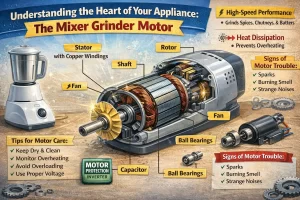
Before we dive into the problems, let’s understand the component at the center of it all: the motor. Most mixer grinders use a “universal motor,” designed to run on both AC and DC power. This type of motor provides high starting torque, which is the rotational force needed to get the blades spinning, especially when dealing with hard ingredients.
A universal motor consists of several key parts:
- Stator: The stationary outer part of the motor.
- Rotor (or Armature): The rotating inner part that spins the blades.
- Commutator: A segmented ring attached to the rotor that helps direct the electrical current.
- Carbon Brushes: Small blocks of carbon that press against the commutator to conduct electricity to the rotor.
When you switch on your mixer grinder, electricity flows through the stator and the carbon brushes to the rotor, creating magnetic fields that force the rotor to spin at high speeds. This powerful rotation is transferred to the blades via a coupler, allowing you to grind, blend, and mix. When any of these components wear out or get damaged, it can lead to motor failure.
Top 7 Causes of Mixer Grinder Motor Failure
Mixer grinder motor failure rarely occurs without underlying causes. Often, a mix of usage habits, external conditions, and lack of routine care is to blame. Understanding both the direct and indirect causes of mixer grinder failure is critical to proactive maintenance and long-term appliance health. If you’re troubleshooting mixer grinder motor problems, it’s important to start with the basics and work step-by-step to identify what’s really happening under the hood.
Below, we break down each key reason for mixer grinder motor failure so you can spot trouble early, avoid a sudden mixer grinder overheating issue, and prevent costly repairs.
1. Overloading the Jars
This is arguably the most common reason for motor failure. Every mixer grinder has a capacity limit for its jars. When you stuff the jar beyond this limit or try to grind ingredients that are too hard or dense in one go, you put immense strain on the motor. The motor has to work much harder to rotate the blades, which generates excess heat and can lead to burnout.
2. Continuous Operation and Overheating
Mixer grinders are designed for short bursts of operation, not continuous running. Running the appliance for several minutes without a break causes the motor windings to heat up rapidly. While most modern mixers have an Overload Protection (OLP) switch that cuts off power, repeatedly triggering it weakens the motor over time. Eventually, the insulation on the motor’s copper windings can melt, causing a short circuit and permanent damage.
3. Voltage Fluctuations
Unstable power supply is a silent killer of kitchen appliances. Sudden voltage spikes can send a surge of electricity to the motor, burning out its internal components. Conversely, low voltage forces the motor to draw more current to achieve the necessary torque, leading to overheating and potential failure. Using a voltage stabilizer can protect your mixer grinder from these damaging fluctuations.
4. Liquid Leakage into the Motor Housing
The seal at the bottom of your mixer jar is critical. If this seal or the jar’s rubber gasket is worn out, liquids can seep out during operation. This liquid can trickle down into the motor housing unit through the coupler. Water and electricity are a dangerous mix. The moisture can cause a short circuit, rust the motor components, and lead to catastrophic motor failure.
5. Grinding Hot Ingredients
Patience is a virtue, especially in the kitchen. Grinding ingredients while they are still piping hot is a bad practice. The steam generated from hot food creates moisture and pressure inside the jar. This moisture can find its way into the motor unit, causing the same problems as liquid leakage. Furthermore, the heat can damage the jar’s blades and lid, leading to other operational issues. Always let your food cool down to at least room temperature before blending.
6. Poor Maintenance and Worn-Out Parts
Like any machine, a mixer grinder requires regular maintenance. Neglecting to clean the jars, blades, and the machine’s body can lead to problems. Food particles can get lodged in the coupler or blade assembly, impeding movement and straining the motor. More importantly, components like the carbon brushes and couplers wear out over time. Worn carbon brushes can cause excessive sparking and poor motor performance, while a damaged coupler can lead to vibration and strain that ultimately damages the motor shaft.
7. Using the Wrong Jar for the Job
Mixer grinders come with different jars for a reason. The small chutney jar has blades designed for small quantities of spices and herbs. The larger wet grinding jar is built for batters and purees. Using a dry grinding jar for wet ingredients, or vice-versa, can be inefficient and strain the motor. The blade design and jar shape are optimized for specific tasks, and using the wrong one forces the motor to work harder than necessary.
Troubleshooting Common Mixer Grinder Motor Problems
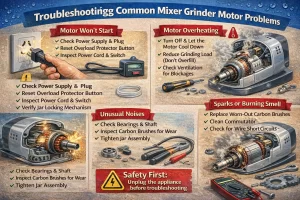
When you encounter issues with your appliance, effective mixer grinder troubleshooting is the key to minimizing downtime and expenses. Many users experience mixer grinder motor problems that may start as small glitches and, if not addressed early, can lead to complete mixer grinder motor failure or even more serious kitchen appliance motor issues.
A proactive approach allows you to spot early symptoms of developing faults, such as strange noises, overheating, or poor performance. These signals typically indicate a deeper issue, such as an emerging mixer grinder overheating issue, failing carbon brushes, or an overloaded system. By taking the right troubleshooting steps, you can often mitigate damage and prevent a major mixer grinder motor failure.
Below you’ll find easy-to-follow solutions, linking everyday kitchen experiences to effective fixes—so you reduce the risk of repeated failure and master both daily and occasional motor maintenance guide routines.
Problem 1: The Mixer Grinder Won’t Start
If your mixer is completely dead, don’t panic.
- Check the Power Supply: Ensure the plug is firmly in the socket and the switch is on. Try plugging another appliance into the same socket to confirm it’s working.
- Inspect the Power Cord: Look for any visible damage, cuts, or frays in the power cord. A damaged cord needs to be replaced by a professional.
- Reset the Overload Protection Switch: This is the most common fix. Look for a small red or black button at the bottom of your mixer grinder base unit. If the motor was overloaded, this button will pop out. Unplug the mixer, wait for a few minutes for the motor to cool, then press the button firmly to reset it.
- Check the Jar Seating: Some mixers have a safety lock feature that prevents the motor from starting if the jar is not placed correctly on the base unit. Remove and reseat the jar firmly.
Problem 2: The Motor is Overheating and Emitting a Burning Smell
An overheating motor is a clear sign of distress.
- Stop Immediately: The moment you notice a burning smell or see smoke, switch off and unplug the appliance.
- Check for Overload: You likely ran the mixer for too long or with too much load. Reduce the quantity of ingredients in the jar.
- Allow it to Cool: Give the motor at least 15-20 minutes to cool down completely before attempting to use it again.
- Ensure Proper Ventilation: Check that the air vents on the motor housing are not blocked by dust, debris, or the surface it’s placed on. Clean the vents with a dry brush.
- Listen for Grinding Noises: A persistent burning smell accompanied by unusual noises could indicate that the motor windings are damaged, and it’s time for a professional repair.
Problem 3: The Motor is Making Loud or Unusual Noises
Strange noises are the motor’s way of crying for help.
- Grinding or Rattling Noises: This often points to a problem with the coupler (the gear on top of the motor unit and at the bottom of the jar). Check if the teeth are worn out or broken. Couplers are replaceable parts.
- Loud Whirring or Screeching: This could indicate that the motor’s ball bearings are worn out and need lubrication or replacement. This is a job for a technician.
- Excessive Vibration: This might be due to a loose blade assembly in the jar or an imbalanced load. It could also mean the motor itself has come loose from its mountings inside the housing.
Problem 4: The Motor is Running but the Blades Aren’t Spinning
This issue almost always points to the coupler system.
- Inspect the Jar Coupler: Turn the jar upside down and check the plastic or rubber gear. If it’s shredded or worn down, it won’t engage with the motor coupler.
- Inspect the Motor Coupler: Check the coupler on the main unit. If its teeth are damaged, it cannot transfer power to the jar.
- Check the Blade Assembly: Sometimes, the blade shaft itself can break or become disengaged from the jar coupler. If you can spin the blades freely with your hand without the coupler moving, the blade assembly is broken.
Your Ultimate Motor Maintenance Guide: Preventing Mixer Grinder Failure
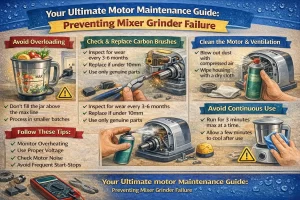
Prevention is always better than cure, especially when it comes to avoiding mixer grinder motor failure. If you want a long-lasting appliance, you need to form simple maintenance habits from the start. Through this comprehensive motor maintenance guide, we’ll show you how proactive care can prevent costly mixer grinder motor problems and control common issues like mixer grinder overheating issue or worn-out parts. Whether you own a home grinder or handle commercial mixer grinder repair in a busy kitchen, these best practices for motor damage prevention and routine checks on your kitchen appliance motor issues ensure longevity and safety.
Why Mixer Grinder Motor Failure Prevention Matters
Ignoring warning signs such as overheating or unfamiliar noises can cause a minor mixer grinder motor problem to escalate into full mixer grinder motor failure. Investing a little time into everyday care—like jar cleaning and proper ingredient loading—directly impacts the health of your mixer’s motor. If you manage professional appliances, regular service and preventive measures can cut down the chance of unexpected commercial mixer grinder repair and reduce kitchen appliance motor issues, which are vital in high-demand food operations.
Smart Motor Damage Prevention for Every User
Proper care isn’t only about longevity—it’s about performance. When you follow the right steps, you control the main causes of mixer grinder failure and keep everyday use hassle-free. Strong attention to mixer grinder overheating issue prevention, correct jar selection, and regular cleaning form the first line of defense. In addition, when you rely on trusted mixer grinder troubleshooting techniques, you’ll quickly recognize patterns that signal trouble, before a bigger mixer grinder motor failure happens.
The Role of Motor Maintenance in Safety
A neglected mixer soon leads to not just inconvenience, but actual danger in the kitchen. Following expert-backed mixer grinder safety tips keeps your household safe from electrical faults, leaks, or overheating. In this section, you’ll find actionable steps for motor maintenance guide routines, ranging from basic jar inspections to advanced checks for those who manage larger, commercial machines.
By practicing these proven methods, you build habits that safeguard your investment, ensure smooth operation, and give yourself the confidence to tackle both minor and major mixer grinder troubleshooting challenges. Whether you’re dealing with daily blending or facing commercial mixer grinder repair needs, you’ll always be a step ahead in protecting against mixer grinder motor failure and all related motor problems.
Daily and Weekly Habits
- Don’t Overload: Always follow the manufacturer’s capacity guidelines (usually marked inside the jar). Grind in smaller batches if necessary.
- Use the Pulse Function: For tough ingredients like spices or coconut, use the “pulse” or “whip” function. Short, controlled bursts are less stressful on the motor than a continuous run.
- Give it a Rest: Never run your mixer for more than 60-90 seconds at a time. Give the motor a two-minute break between cycles to cool down.
- Clean After Every Use: Wash the jars, blades, and lids immediately after use. Do not immerse the base unit in water. Wipe it with a damp cloth.
Monthly Checks
- Inspect the Gaskets: Check the rubber gaskets on the lids for cracks or wear. A loose gasket can cause leaks.
- Check the Jar Coupler and Blade Shaft: Ensure the blade assembly is not loose. Try to wiggle it; if it moves excessively, the bush or bearings might be wearing out.
- Clean the Air Vents: Use an old toothbrush or a small brush to clean any dust accumulated in the motor housing’s air vents. Blocked vents are a primary cause of overheating.
Yearly Professional Check-up
- Carbon Brush Replacement: The carbon brushes wear down with use. If you notice increased sparking from the motor vents or a drop in performance, it’s time to get them replaced. This is a simple and inexpensive fix that can prevent major motor damage.
- Bearing Lubrication: Having a technician check and lubricate the motor bearings annually can ensure smooth, quiet operation.
A Special Note on Commercial Mixer Grinder Repair
In the world of heavy-duty appliances, commercial mixer grinders face some of the harshest work environments. This often leads to more frequent mixer grinder motor failure than in home settings, mainly due to extended run-times, higher volumes, and tough ingredients. Addressing mixer grinder motor problems quickly is crucial to avoid downtime in busy commercial kitchens.
Proper commercial mixer grinder repair should always be handled by trained professionals, since these machines are much more powerful and complex than typical home models. Common causes of mixer grinder motor failure in commercial units include extreme overheating, improper cleaning routines, and ignoring early warning signs such as strange noises or inconsistent performance. When troubleshooting, a proactive approach is best—look for signs of wear and tear, monitor for mixer grinder overheating issues, and never ignore leaks or drops in power output.
Timely and expert attention is especially important when you encounter persistent commercial mixer grinder motor problems, as problems can escalate from minor motor damage into complete failure. Investing in regular professional servicing also helps prevent the most common kitchen appliance motor issues—like burnt windings or damaged couplers—that can threaten kitchen operations.
One preventative strategy for reducing the risk of mixer grinder motor failure in commercial settings is to set up scheduled motor maintenance guides with reputable service companies. Opt for preventative maintenance contracts: these typically include routine inspections, cleaning, bearings lubrication, and replacement of wearable components. Implementing these motor damage prevention steps will significantly reduce the need for unscheduled commercial mixer grinder repair and extend your appliance’s overall service life.
Additionally, don’t underestimate the value of mixer grinder safety tips in commercial kitchens. Run all safety checks—ensure the jar is locked and the lid secured before operation, never bypass any safety switches, and educate your team on the importance of immediate shutdown if there’s any sign of mixer grinder overheating. Following manufacturer guidelines, keeping the machine clean, and sticking to a thorough motor maintenance schedule all play a part in avoiding avoidable motor failures and costly repairs.
In summary, consistent preventive care, professional commercial mixer grinder repair, and daily attention to mixer grinder troubleshooting and safety are the best defense against unexpected mixer grinder motor failure—especially in demanding commercial environments.
For commercial units, motor failure is often due to extreme overheating from prolonged use or attempting to grind materials beyond the machine’s capability. Repairing these heavy-duty motors is a specialized task.
- Professional Service is Key: Do not attempt DIY repairs on a commercial mixer grinder. Their motors are more complex, and incorrect handling can be dangerous.
- Motor Rewinding: In many cases of commercial motor burnout, the motor can be “rewound.” This process involves removing the burnt copper windings and replacing them with new ones. It is a cost-effective alternative to replacing the entire motor unit.
- Preventative Maintenance Contracts: Many service providers offer annual maintenance contracts for commercial kitchen equipment. These contracts include regular inspections, cleaning, lubrication, and replacement of wearable parts, significantly reducing the risk of sudden breakdowns and expensive mixer grinder motor failure.
Essential Safety Tips for Mixer Grinder Operation
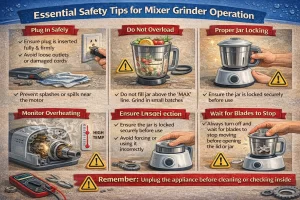
Your mixer grinder is a powerful tool, and safety should always be a priority.
- Never operate the mixer with a loose or open lid. The pressure can force the lid off, creating a huge mess and a safety hazard.
- Ensure the jar is locked securely onto the base before starting.
- Keep your hands away from the jar mouth during operation. Use the provided spatula or plunger to push ingredients down only after switching the machine off.
- Unplug before cleaning. This prevents any accidental start-ups.
- Place the mixer grinder on a stable, flat surface to prevent it from vibrating and falling during use.
Conclusion: Power Up Your Kitchen Knowledge
A mixer grinder motor failure can feel like a major setback in the kitchen, but with the right information, this issue is often completely avoidable. Throughout our guide, we’ve explained the primary causes of mixer grinder failure and shown how recognizing early mixer grinder motor problems—such as irregular sounds, slow performance, or a persistent mixer grinder overheating issue—is crucial for effective maintenance. Taking the right steps for motor damage prevention and following dedicated mixer grinder safety tips can help preserve your appliance’s longevity and performance.
Regular care is at the heart of preventing mixer grinder motor failure. If your mixer grinder stops suddenly, emits a burning smell, or struggles to turn on, don’t ignore these warning signs. Reference this extensive motor maintenance guide section to tackle routine upkeep—addressing everything from replacing worn-out carbon brushes to deep cleaning after liquid spills can minimize the risk of both domestic and commercial mixer grinder repair needs. This hands-on approach not only avoids sudden appliance breakdowns but also reduces downtime in commercial kitchens where kitchen appliance motor issues can disrupt food prep on a larger scale.
By following the mixer grinder troubleshooting tips we’ve outlined across common scenarios—such as power issues, excessive noise, or blades not spinning—you’ll be empowered to handle routine problems without hassle. Focus on addressing one issue at a time and, where necessary, call in professional service, especially for commercial mixer grinder repair or persistent mixer grinder motor failure.
Adopting these habits means you’ll protect your appliance from frequent mixer grinder overheating issues, avoid major mishaps, and support optimal performance. Emphasize routine maintenance, safe operation, and never hesitate to refer to our mixer grinder motor failure guide whenever new mixer grinder motor problems emerge.
Remember, whether you’re looking to solve specific kitchen appliance motor issues or simply keep your equipment running smoothly, this comprehensive guide and motor maintenance guide is here to support you at each step. Consistently apply mixer grinder safety tips, take action on any unusual symptoms, and use all sections—on motor damage prevention, troubleshooting, and effective care strategies—to be proactive in avoiding mixer grinder motor failure both now and in the future.
Remember to respect your machine’s limits, keep it clean, and listen for any signs of distress. Overloading, overheating, and liquid damage are the three biggest enemies of your motor. A little care goes a long way in preventing mixer grinder motor failure and guaranteeing that your mixer grinder is always ready for its next task.
Preventing Mixer Grinder Motor Failure: The Key to Longevity
If you want to avoid unexpected breakdowns and protect your investment, follow essential practices that keep mixer grinder motor failure at bay. Start by identifying early mixer grinder motor problems—such as unusual noises, overheating, or sudden stops—that can be early indicators of more serious trouble. Understanding the main causes of mixer grinder failure gives you a head start, whether it’s an ongoing mixer grinder overheating issue or damage caused by leaks and poor maintenance.
Motor Damage Prevention in Action
Taking steps for motor damage prevention is vital. Always operate your mixer grinder according to safety guidelines, and don’t ignore even minor signs of kitchen appliance motor issues. Professional help may be necessary when ongoing problems persist, especially in commercial kitchens, where timely commercial mixer grinder repair can return your appliance to optimal performance before costly downtime occurs.
Mixer Grinder Safety Tips for Everyday Use
Applying consistent mixer grinder safety tips increases daily reliability and helps reduce risks of injury or appliance failure. Simple actions like unplugging before cleaning, ensuring the jar is locked, and never overloading support safer use and preserve your motor.
The Role of a Motor Maintenance Guide
Always refer to a reliable motor maintenance guide and set a regular routine for both minor and deeper cleaning. Monthly checks for worn-out parts, gasket replacement, and cleaning air vents are small steps that add up, helping you steer clear of chronic mixer grinder motor failure and avoidable mixer grinder motor problems.
Mixer Grinder Troubleshooting as a First Line of Defense
Before calling for repairs, apply basic mixer grinder troubleshooting to common issues. Resetting the overload protection button, checking for coupler wear, and ensuring blades are intact can solve many routine kitchen appliance motor issues. If the problem goes beyond basic fixes, seek expert help—especially if you spot repeated signs of mixer grinder overheating issue or total motor shutdown.
Through consistent action and attention to all these aspects, you’ll minimize the risk of mixer grinder motor failure and keep your appliance in top condition—whether at home or in a busy commercial environment. By staying alert to mixer grinder motor problems, understanding the causes of mixer grinder failure, addressing any mixer grinder overheating issue quickly, following motor damage prevention steps, seeking timely commercial mixer grinder repair when needed, applying smart mixer grinder troubleshooting, being aware of kitchen appliance motor issues, practicing mixer grinder safety tips, and relying on this motor maintenance guide, you’ll keep your appliance running efficiently for years to come.
Frequently Asked Questions (FAQs)
- Why did my new mixer grinder smell like it was burning on the first use?
It’s normal for a new mixer grinder motor to emit a slight burning smell for the first few uses. This is the varnish coating on the motor windings curing with the heat. The smell should disappear after two or three uses. If it persists or is very strong, contact customer service. - Can I run my mixer grinder continuously for 5 minutes?
No, you should never run a domestic mixer grinder continuously for that long. Most manufacturers recommend running it in short intervals of 60-90 seconds with a 2-minute cooling period in between to prevent mixer grinder motor failure from overheating. - What is the red button at the bottom of my mixer grinder?
That is the Overload Protection (OLP) switch. It’s a safety feature that automatically cuts power to the motor if it gets overloaded or overheats, preventing permanent damage. If it trips, unplug the mixer, reduce the load, let it cool for a few minutes, and then press the button to reset it. - My mixer grinder is sparking from the bottom. Is it dangerous?
Minor, occasional sparking from the motor vents can be normal, especially in a new appliance, as the carbon brushes settle. However, if you see continuous, heavy sparking, it indicates that the carbon brushes are worn out and need immediate replacement by a technician. - Why is my mixer jar leaking from the bottom?
A leak from the bottom of the jar is usually caused by a worn-out rubber washer or a damaged blade assembly shaft. Stop using the jar immediately, as the liquid can seep into the motor and cause a major failure. You can buy a replacement blade assembly or washer. - Can I sharpen the blades of my mixer grinder?
Mixer grinder blades work by pulverizing ingredients with speed and impact, not by slicing like a knife. They are designed to be blunt. Attempting to sharpen them can damage them and affect their performance. If grinding is inefficient, it’s more likely due to a weak motor or using the wrong speed/jar. - How do I clean the coupler on the motor unit?
Unplug the appliance. Use a damp cloth to wipe the motor coupler and the surrounding area. For stubborn food particles lodged in the teeth, you can use a dry, old toothbrush to gently brush them out. Never pour water on the base unit. - Is it better to repair or replace a mixer grinder with a failed motor?
This depends on the age of the appliance and the cost of the repair. If the mixer is relatively new and the repair (like replacing carbon brushes or a coupler) is inexpensive, repairing it is a good option. If the motor is completely burnt out on an older model, the cost of a new motor might be close to the price of a new mixer grinder, making replacement a better choice. - Can voltage fluctuations really damage my mixer grinder?
Yes, absolutely. High voltage surges can instantly burn out the motor, while low voltage makes the motor draw more current, leading to overheating and gradual damage. Using a good quality voltage stabilizer for your kitchen appliances is a wise investment. - What should I do if the mixer grinder stops mid-operation?
First, check if the overload protection switch has tripped. If it has, reset it after a cooling period. If not, check your home’s circuit breaker. If the power is fine and the OLP switch is not the issue, it could be a sign of a more serious internal problem, like worn-out carbon brushes or a motor failure, requiring professional help.